コンスト|konst
陽画
作品解説
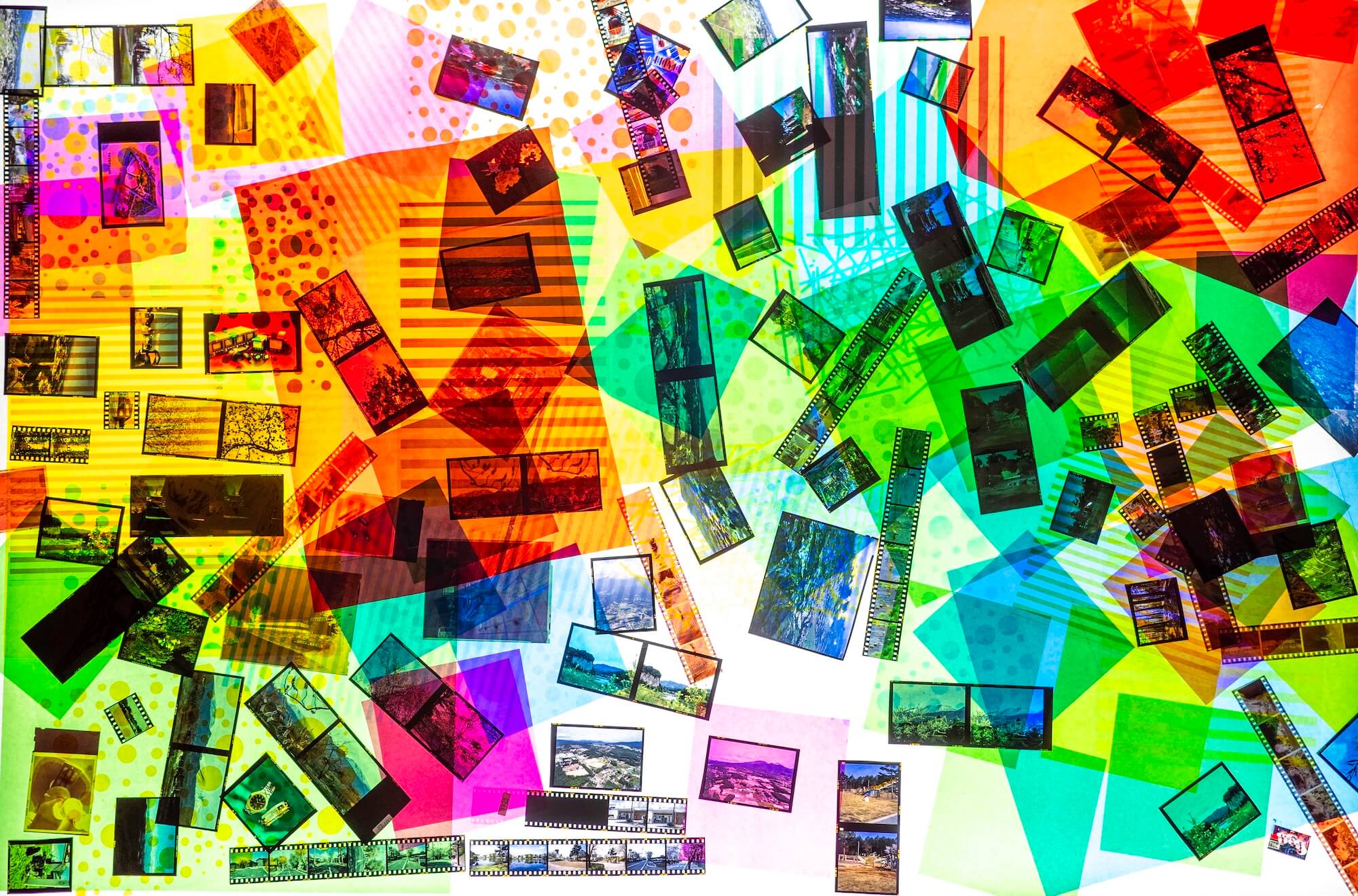
軽井沢の福祉施設に通うクリエイターたちによるkonstがワークショップで共同制作したこのイメージは、1950年代から御代田町役場に保存されてきた記録写真と、町民から借り受けたアルバム写真を素材にコラージュされたものだ。
役場に残されていた写真の多くは、工事や式典、特産品などを町内外に正しく伝えるための記録写真として撮られた。その中から厳選した大判ポジフィルムに、水玉やストライプなど色鮮やかな模様を印刷したOHPフィルムを、ライトボックスで下から光を当てながら自由に動かしたり、重ねたり。それは透過するイメージが幾重にも重なり合う工程で、一人のアイデアに他の誰かのアイデアが重なっていく、共創の時間でもあった。やがて御代田町に生息する(かもしれない)妖精や妖怪のような存在が現れ、人や建物は模様の一部へと溶け込み、記録写真は思いもよらない景色へと姿を変えていったという。
写真は、時代時代に形や役割を変えていく。人の手によって切り取り、重ねられ、新たな視点が加わることで、その意味は更新され続ける。かつて町の広報として働いた写真は、時代もミッションも異なる人々との出会いを経て、新たな物語や想像を育む創造の素材となった。一枚の写真が人から人へ受け渡されながら、新しい意味を獲得していく変化の実践がここにある。
Created collaboratively in workshop with a welfare facility, this work draws on photographs preserved by the Miyota Town Office since the 1950s and album images lent by residents.
Many of these municipal photographs—records of construction, ceremonies, and local industries—were made to convey information with clarity and restraint. In the workshop, selected largeformat positives were placed on a lighted surface and overlaid with OHP sheets printed with vivid dots and stripes. As participants shifted these translucent layers, images dissolved and reformed; whimsical creatures that might inhabit Miyota seemed to appear, while people and buildings slipped into patterned fields.
Cut, layered, and recontextualized, the photographs shed their original purpose. Once unemotional records, they became materials for speculation and play, transformed through encounters across generations and intentions. Passed from hand to hand, they gathered new associations and subtle affinities, revealing how photography’s meaning evolves when images are touched, moved, and reimagined together.
Profile
コンスト|konst
2024年より、軽井沢の福祉施設に通うクリエイターの表現を、商品やデザイン、さまざまな仕事へとつなぐ活動を行う。障がいの有無ではなく、作品そのものの魅力や表現力によって選ばれ、その創造性に見合う対価が作り手へ還元される社会を目指している。創作の場では完成形をあらかじめ定めず、対話や試行錯誤を重ねながら、一人ひとりの得意なことや、その人にしか生み出せない表現を見つけていく。誰かが描いた絵を誰かの暮らしへ届け、大きな仕事が小さなアトリエを支える循環をつくっている。
Since 2024, the collective has connected creators at a Karuizawa welfare center with products, design, and professional projects, building opportunities in which each work is recognized on its own terms and its value is fairly returned to its maker. Rather than fixing outcomes in advance, it develops projects through dialogue, discerning each participant’s strengths and modes of expression while fostering a sustainable cycle in which creative practice supports the atelier itself.